History

Beauty through the ages

People have always taken care of themselves, and almost always the dangerous lived right next to the useful. Seven stops in history with museum objects, and the lessons that follow from it.

Ancient Egypt

Kohl: beauty and protection

In ancient Egypt eyes were lined with black kohl. Analysis of ancient cosmetics showed it contains galena, a lead mineral, and lead salts that do not occur in nature in that form: they were made by chemistry.

In 2010 French chemists showed in a cell experiment that tiny doses of these salts make skin cells release nitric oxide, which switches on defence reactions. Kohl may partly have protected the eyes from infections. But lead remains a poison: today it is banned in cosmetics.

Sources (1)
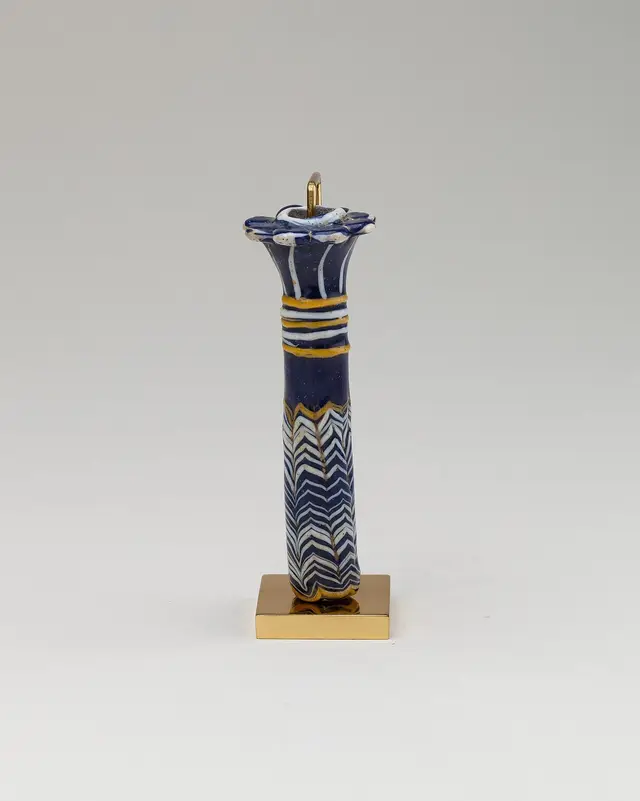
Glass kohl tube, ancient Egypt
Photo: The Metropolitan Museum of Art · CC0 · file page

Rus · from the 11th century

Steam and a bundle of twigs

The bathhouse with steam and a bundle of twigs, the venik, is one of the oldest care traditions of Rus. A story about wooden bathhouses where people beat themselves with twigs and then pour cold water over themselves is already in the Primary Chronicle, written in the early 12th century.

Wooden bathhouses still stand in yards and in open-air museums of wooden architecture, like this one in Malye Korely near Arkhangelsk.

Sources (1)
Wooden bathhouse in the Malye Korely museum
Photo: Ludvig14 · CC BY-SA 4.0 · file page

Vietnam · 2,000 years ago to the 20th century

Blackened teeth and bồ kết water

Teeth blackening in Vietnam is very old: in 2026 archaeologists found its traces on teeth from a 2,000-year-old burial in the north of the country. The traces matched recipes still written down in the early 20th century, when many peoples of Vietnam kept the custom. In Japan a similar custom, ohaguro, was banned for the nobility in 1870.

In Vietnam hair has long been washed with a decoction of gleditsia pods, bồ kết: they contain saponins that foam and cleanse.

Sources (3)
Young woman with blackened teeth, Tonkin, 1915
Photo: Léon Busy · CC0 · file page

Italy · the Renaissance

Dangerous beauty

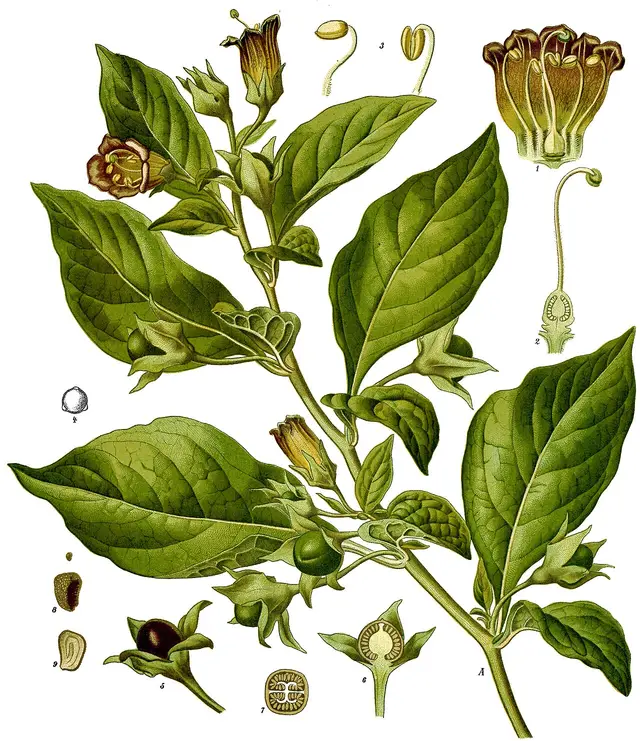
In Renaissance Italy people dropped belladonna juice into their eyes to make the pupils look larger. Hence the plant’s name: Italian for “beautiful lady”.

Atropine from belladonna still dilates pupils today, at the eye doctor and in tiny doses. For centuries poisons were sold as beauty aids: the harm did not show at once or in everyone.

Sources (1)
Botanical plate: belladonna, 19th century
Photo: Franz Eugen Köhler, Köhler's Medizinal-Pflanzen · Public domain · file page

20th–21st centuries

From dangerous fashion to rules

In the 1930s an eyelash and eyebrow dye based on PPD blinded several people in the US. In 1938 cosmetics came under federal law for the first time, and regulators gained the right to check them.

Today the EU bans more than 1,700 substances, the EAEU and Vietnam keep their own lists, and the ingredient list, the period after opening and sun protection are an ordinary part of the label. Cosmetic safety is the result of rules, not promises.

Sources (2)

What history says today

Harm can be delayed

Lead, mercury and radium did no harm on the first day, which is why people wore them for centuries. That is exactly what regulations and long-term studies are for.

Fashion changes, UV does not

The fashion for pale skin and the fashion for tans have taken turns, but the sun acts on skin the same way. Protection is not a matter of fashion.

Traditions are knowledge too

The banya, herbal infusions, oils: many care traditions have lasted for centuries. Which of them work, and in what dose, is tested by research today.